In this post I offer a cross-cutting description of the French and German energy transitions in terms of energy production: biogas, wood, nuclear, intermittent renewable energy (iRE), the power network, hydrogen (as an energy carrier) and heat pumps. For now I set aside essential subjects such as building renovation, sufficiency and the electrification of transport. My French standpoint means I mostly talk about France, but always looking for what Germany’s experience — which is rich, even though we are not taking the same path — can bring us. I learned a good deal writing this text, but I hope to learn more from the well-meaning remarks I may receive and the constructive exchanges that may follow. Two ideas about our French system became clearer to me while writing: (1) energy is always a sector with a strong environmental impact, but in many cases throwing the baby out with the bathwater will lead us into a wall. What is needed is to raise the requirements placed on each sector through regulation and recycling, not to wish for its end without measuring what that implies for the whole energy system. (2) the ageing of our nuclear fleet requires strong decisions today. We should develop new generation capacity in every sector, including new EPRs and intermittent renewables. That does not preclude sufficiency, which must come first, but sufficiency and the existence of our ageing nuclear fleet are very poor excuses for not developing new generation capacity. The way the French look at the German energy transition is symptomatic of the difficulty we have in shedding ideological divides in order to carry out our own transition. Germany crystallises by turns the fears of some and the desires of others, and whether on our successes or our failures, or on our sometimes different methods, the analysis is only of interest if one seeks to understand the facts demandingly, without falling into caricature. We are all pursuing the same objective: reaching carbon neutrality by 2050. We are all starting from far away. Less so in France than in Germany, because when imports are taken into account France’s carbon footprint in 2018 is of the order of 10 tCO2/person/year (a 2020 estimate gives [Ministere2020]; the method was updated at the end of 2020 [Ministere122020]), and closer to 16-17 tCO2/person/year for Germany depending on the source (source [exiobase], with slightly higher emissions estimated by the [German statistical office]). According to the IPCC, our CO2 emissions should be between 1.6 t (low case) and 2.8 t (high case) of CO2/person/year. France owes this better GHG performance to its relatively low-carbon electricity mix, but it is hard to consider that our nuclear fleet, with an average age of more than 35 years, is today an advantage in the perspective of a 2050 decarbonisation scenario.
In France a work plan is taking shape progressively in the national low-carbon strategy (SNBC, introduced in the 2019 energy-climate law [SNBC-v032020]), which aims to reduce gross emissions from human activity to 80 MtCO2eq/year by 2050, from about 450 MtCO2eq/year today (not counting imports, which are part of a separate strand of the SNBC), while monitoring our short-term trajectory. Since 2019 this carbon neutrality objective has in fact been shared across the whole of Europe, and one can see in the fight against climate disruption a genuinely unifying force.
We share the broad lines of the method: reducing energy consumption, increasing the use of renewable and low-carbon energy, electrifying heat and transport, increasing the share of low-carbon hydrogen within hydrogen so as to decarbonise industry, and using biogas for capacity purposes. The energy transition goes through an electrification of end uses (heat with heat pumps and transport with electric vehicles) that will increase our electricity consumption. The efficiency of these systems, together with sufficiency, makes a moderate increase conceivable. For France, the SNBC currently anticipates electricity consumption above 600 TWh in 2050 (see Table 1), which is a fairly small increase given the fuel switching envisaged (transport, heat) and compared with other scenarios such as [NegaTep2017], which speaks of 700 TWh, or this note from the Academy of Technologies, which mentions 790 TWh [Academie2021]. All these scenarios, in France and in Germany, rest on a decline in our primary and final energy consumption. Only one scenario in France advocates a decline in electricity consumption: Negawatt 2017, which envisages 300 TWh/year by 2050 [Negawatt2017]; it is to be updated shortly.
The differences and particularities of each country are numerous and must not be forgotten. For example, the Germans are somewhat more numerous than we are — 83 million in Germany against 67 in France — their GDP per capita is somewhat higher than ours, and German industrial activity is larger than France’s, which translates into a French trade deficit of €60 bn in 2018 [Tresor2018] and a German trade surplus of €250 bn the same year. All this implies higher energy consumption and purchasing power in Germany (see Table 1) but, from the angle of climate objectives as they are accounted for today, it does not count part of the effort made by Germany that results in a lower carbon content of its exports. Germany, like France, bears the carbon content of the rest of the world through its imports. In France that share of imported emissions is growing.
These differences affect our respective energy systems. They are linked to the natural spaces that cover our territories and that we must respect — for instance for the development of wood energy or biogas, which we discuss in the first section, but also as regards coal and its exploitation in Germany, the subject of the second section. The richness of our histories, as well as of our political particularities, is at the origin of different visions of planning and of the development of the national system. They are a source of tension, as with the question of nuclear and of intermittent renewable energy (iRE, i.e. solar PV and wind), which we discuss in sections three and four. It is amid these tensions that Europe has given itself the difficult task of bringing visions closer together and fostering exchange; we will therefore briefly mention a few issues related to how the market works. Finally, we will talk about what distinguishes our electricity networks, as well as about hydrogen development strategies.
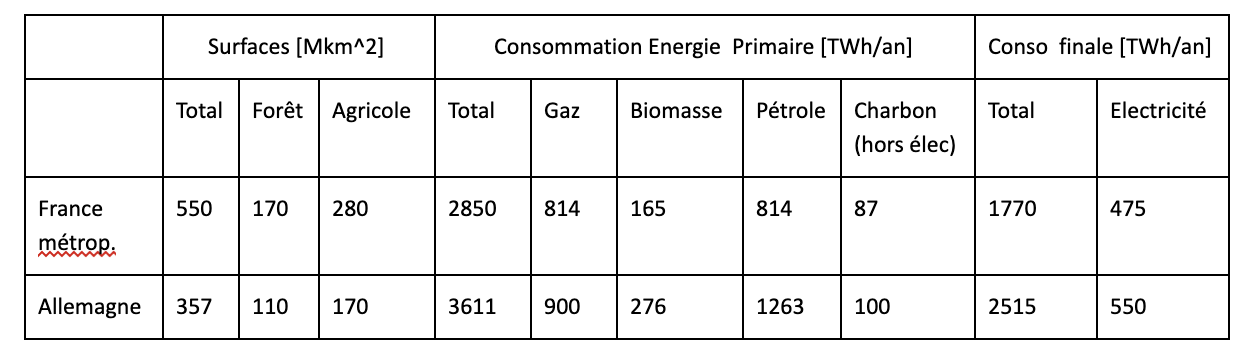
Table 1 – Left: French land areas. Right: consumption. 2018/2019 figures. (source [Germany])
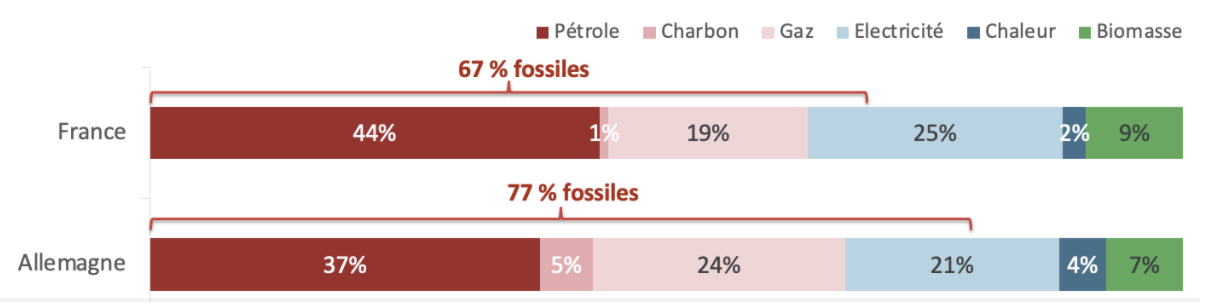
Figure 1 – Breakdown of final energy consumption (closer to the realities to be considered when discussing the transition than the primary energy breakdown that could be deduced from Table 1). 2018/2019 figures. (source [Germany])
Biomass - sustainable management does not rule out the importance of these sectors.
Sustainable exploitation of biomass, a contradiction in terms?
Whether for wood or for agricultural biomass, the biomass potential is limited — in the world and in France and Germany in particular. In its use, priority must be given to food and construction. Any exploitation must be carried out under strict environmental constraints. But does that mean we should give up on the energy use of biomass?
The mosaic forest concept developed by the French forestry office (ONF) [ONFMosaique] in public forests should be generalised. Moreover, the good-practice rules to be integrated into wood-energy management are known but not imposed everywhere: limiting the use of whole trees and favouring, for energy purposes, the residues of the forestry industry (which favours timber) and of cuttings, if that does not affect soil fertility; banning harvesting in areas of high ecological or biodiversity value. As Figure 2 shows, this subject is particularly difficult to control today on the very numerous small private plots in France (labelled “self-supply of wood and short circuits” in the figure). Exploiting biomass can lead to the best or to the worst, but that does not mean it should be excluded; energy use can only come second, yet it is far from non-existent — all the more so as, even with volumes far smaller than those of the power system, biomass can play various key roles, such as a capacity service with gas or a local heat resource with wood.
Where agricultural biomass is used to produce biogas, it can even rest on a virtuous circular-economy system with no competition with food or with forest development. It is enough to require, as is done today, that the inputs used come from crop residues, animal manure and intermediate crops that enrich soils [MinistereCIVE]. Unlike what was done in Germany at the end of the 2000s — but restricted since — France does not encourage dedicated crops for energy production and limits to 15% of the gross tonnage of a digester’s inputs what may come from dedicated crops. Finally, the anaerobic digestion reaction that produces the biogas also generates a digestate that can then serve as fertiliser in agriculture, even though there is much to learn on this subject about the effects of spreading and tillage techniques (on nitrous oxide emissions in particular; agroecology is an important research topic today, and generally so for agriculture [AgroEcologie2017]). Its carbon footprint is today assessed at 44 gCO2eq/kWh [BiogazADEME2020], entirely compatible with carbon neutrality and which could be better still with CO2 capture during the upgrading stage. The Solagro association has proposed several estimates of the resource induced by farming methods and by our eating habits: less meat, environmentally respectful agriculture. Taken together, this can make anaerobic digestion one of the levers of the agroecological transition [METHALAE2020], [TerraNova2021]. For an overview of anaerobic digestion in France one can consult [ENEA2017].
Present and future use of wood energy
Our neighbours live on a much smaller territory, with less forest and far less farmland. Despite that, wood energy is more developed in Germany, which even imports part (a few %) of the wood dedicated to energy. For our countries this type of import is not today a guarantee of environmental quality. On our territories, it is the sustainable management of private forests — especially small or fragmented ones — that remains an important issue. Our methods are still far from perfect. Clearing permits are still too easy to obtain in France.
As regards its use, wood mainly serves to produce heat in individual boilers, but also for the cogeneration of heat and electricity, and very rarely in power plants without a heat cogeneration system. In France use is also mainly for heat, and cogeneration of electricity and heat exists. Electricity-only generation is for now excluded, even though the Gardanne plant remains a threat from that standpoint [Gardanne2020]. The Germans have for some years been starting to install solid biomass gasification systems.
The GHG emissions from using, as a heat source, wood obtained through sustainable forest management are compatible with a low-carbon strategy [ADEMEEmissionsBois]. But the use of wood energy also raises air quality problems, which is why the “flamme verte” label exists [ADEMEFlammeverte] and why care must be taken about how this wood is burned.
As regards future possibilities, an ADEME study [ADEMEForet2016] states that we could increase our use of wood energy by 2035 to 250 TWh/year for energy, while maintaining sustainable management. According to that study it is not a matter of over-exploiting the French forest or importing wood from deforestation elsewhere in the world, but more simply, for instance, of favouring short value chains for the use of wood in construction and furniture making and recovering the usable waste for heat. The existence of abuses in the exploitation of some forests should push us to tighten regulations across all forests, not to abandon the use of wood. For now, caution seems in order, because a disastrous effect of drought periods on forests is being observed and the French mapping agency (IGN) struggles to say whether over the past 3 years the forest is still growing (see [IGNInventaire2019], section 3, “à noter”).
Figure 2 – energy use of biomass (forest and agricultural) in Germany in 2017 and in France in 2018-2019, figures in TWh (source for Germany [Thran2020], source for France for wood [FluxBiomasse], source for France for agriculture: various ministry documents). See also [OFATEBioEnergie2020].
Present and future use of agricultural biomass
Germany developed biogas well before France and holds a leading position in Europe; the main outlet for this gas from agricultural plant matter is the cogeneration of heat and electricity. In 2018 the Germans thus produced around 31 TWh of electricity and 16 TWh of heat [IFRI2019]. Upgrading biogas into biomethane represents only a small part of that biogas (9 TWh in 2019), but the deployment of intermittent renewables is reducing the profitability of using biogas for cogeneration; by 2030 the government no longer wishes to subsidise this area, and the end of guaranteed tariffs risks pushing biogas producers to find other outlets for their gas or to close down. Injecting the gas into the network is one; liquefying the biogas before transporting it to upgrading units is an alternative solution proposed by a young French company [SublimeEnergie]. Today Germany does not really envisage growth in this biogas sector; the EEG has retained an increase in capacity for stable electricity production (at 31 TWh). That should make it possible to move from baseload generation to generation more complementary with the intermittency of renewables.
In France, biogas is very little developed and the choice seems to be to go directly to biomethane (purification of the biogas then injection into the network). At the end of December 2020 we had 3.9 TWh/year of installed biomethane capacity; the list of existing installations is open data [InstallationsBiogaz]. The queue for new projects as of 31 December 2020 was 26.5 TWh [PanoramaGaz2020]. That queue is caused in large part by the announcement of how prices will evolve in the years to 2030. Indeed, these tariffs are meant to lead to a self-financing sector under the effect of falling biomethane production costs and the rise of the carbon tax, of the methane molecule and of part of the monetisation of positive externalities; they are therefore at their highest today. If we really choose to penalise natural gas for its poor carbon impact, biomethane volumes could increase considerably by 2050. Indeed, the biogas resource has been assessed at more than 100 TWh/year in a study carried out by Solagro [AFTERRE2050], which is the target given in the SNBC for 2050. By 2030, the energy regulator sets the objective of “greening” 10% of the gas [CREGaz2030].
For biogas from agriculture, as for biomass, one can reach the best or the worst. Over-exploitation must be avoided and sustainable management imposed, which goes through regulatory constraints and perhaps additional labelling — and none of that is incompatible with use in energy or in construction, quite the contrary. That gives a resource which is far from infinite, and one can never repeat enough the importance of sufficiency, without the resource being negligible or in decline.
German coal, the trap of a local resource.
Germany’s territorial asset and trap is its open-pit lignite mines, which still provide 240 TWh/year of primary energy transformed into about 110 TWh/year. Buying the same volume of gas would add more than €3 bn/year of import spending. Moreover, these resources and their exploitation generate jobs that will have to be eliminated, but also significant tax revenue for some Länder. Besides, the companies that exploit the coal, and that have sometimes invested recently, will not leave without asking for compensation. This coal is probably the most polluting energy source on every count, and the lignite the Germans exploit is probably the worst kind of coal. It goes without saying that coal is a real thorn in the German energy system. Yet the Germans are today committed to closing all their plants by 2035-2038, and the current development of renewables in Germany could even accelerate that exit. Personally I think Germany should have given priority to exiting coal over exiting nuclear given the climate stakes, but I respect the country and its inhabitants and I take note of the democratic decision that was taken. That said, there is no failure here of intermittent renewables (iRE: wind and solar PV) to meet the decarbonisation objective. In Figure 3 one can see the upward evolution of intermittent renewable generation over the last ten years and, against it, the fall in coal-fired electricity generation and, to a lesser extent, in nuclear generation.
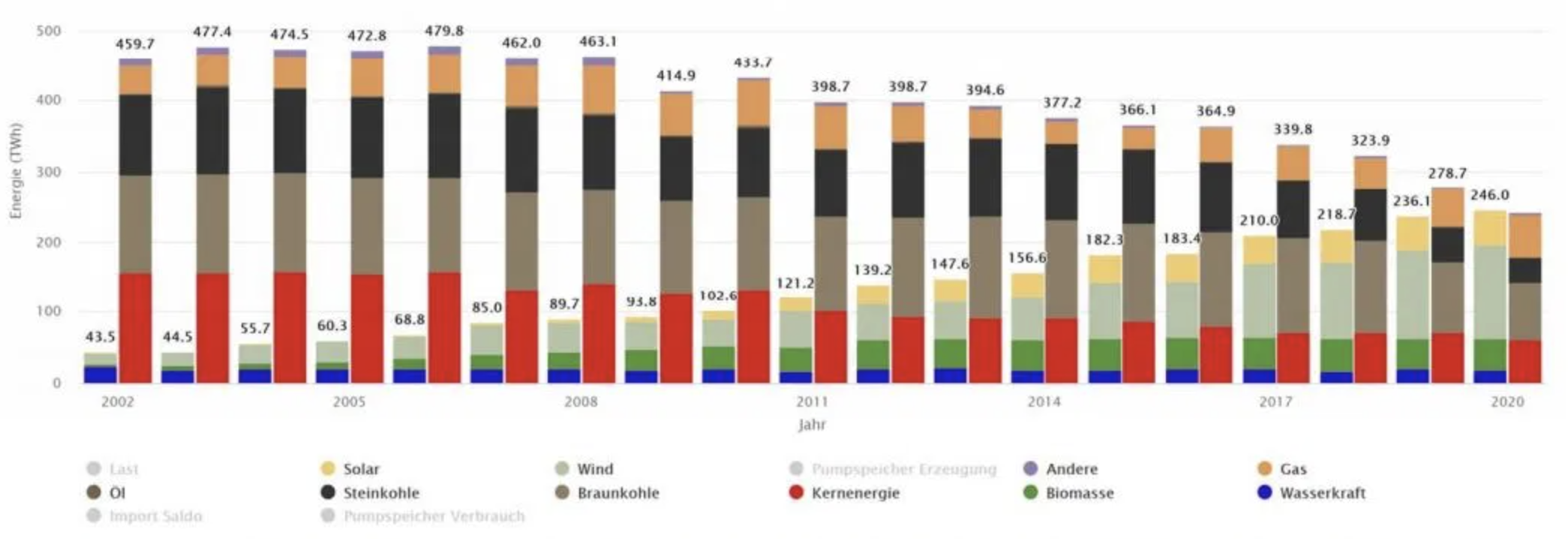
Figure 3 – evolution of electricity generation in Germany over the last 20 years. Between 2010 and 2019 the rise of intermittent renewables (+142 TWh), the fall in consumption (-35 TWh) and the fall in exports (-15 TWh) allowed a fall in coal (-70 TWh: -50 TWh for black coal and -20 TWh for lignite) and a fall in nuclear (-57 TWh). Source: [Energy-Charts].
Nuclear, a question of legacy.
The main subject of tension between Germany and France on energy questions is indeed nuclear. Our neighbours withdrew from the originally Franco-German EPR programme and chose a path (zero carbon, zero nuclear) that we find very hard to subscribe to. In return, Germany does not officially recognise a role for nuclear with respect to the decarbonisation challenge, even though the green taxonomy being put in place at European level should include nuclear. Moreover, the extension of the lifetime of French plants is badly perceived by those living near the French border [ASN042021-riverains] and notably by Germany.
An undeniable industrial success
A few words must be said about the history of the development of this low-carbon energy in France, because it represents today 75% of electrical energy production and makes the French system a global exception. Indeed, only Slovakia and Ukraine have more than 50% of their electricity produced from nuclear in the electricity mix. In terms of absolute output (volume produced per year) France is second (China is not far behind for now, and only the United States produces more than France).
The success of the civil nuclear programme, begun shortly after the war and completed at the end of the 1980s, is still today a source of pride for France and a symbol. It is first of all that of a strong centralised State that was able, after the war, to build an industry for military purposes and to take advantage of a rather favourable period. The preliminary development of the sector benefited from the post-war boom, and the construction of the plants from the mid-1970s could rely on dollar financing on the American financial markets — a first at the time, which avoided resorting to public debt. The financing and repayment period was a colourful one in terms of the franc-dollar exchange rate [Feiertag2013], and EDF’s financiers proposed innovative strategies at the time to take advantage of the fluctuating dollar-franc rate. The success of the programme also owes something to North Americans: after the war, scientists came to share their knowledge and join French research. Later, after the oil shock, the French benefited from the experience of Westinghouse, which sold EDF a licence for a 900 MW pressurised water reactor already proven on the other side of the Atlantic. All these factors quickly allowed serial development, and in its wake the all-French design of larger units (1300 MW then 1450 MW), which earned Framatome in 1981 a licence as an “equal partner” with Westinghouse. French industrial success is undeniable: between 1980 and 1990 France commissioned on average 4 GW per year; in terms of additional energy produced each year, one must picture a transition 2 to 3 times faster than the one the Germans are achieving today with renewables, which can be seen in Figure 3. By the end of the 1980s, the 63 GW we have today (Fessenheim aside) were in service, i.e. roughly 40 times the Flamanville EPR under construction today. To understand the importance of the sector in France, one cannot omit the 70 years of the country’s enthusiasm for the associated scientific success, led by the CEA since the post-war period — a community that is still substantial today. German history in the same period was constrained militarily, less centralised in its policy, less glorious for its nuclear industry; research on the subject is not developed there as it is in France.
What alternatives lie ahead for France?
That said, this success is now behind us. We are fortunate to benefit from low-carbon electricity generation today, and it gives us useful room for manoeuvre, but the ageing of the fleet also puts us in a delicate situation and makes it necessary to plan new investments now. The issue is very simple for France: not to find ourselves in 2050 with a power fleet averaging 70 years of age, impossible to replace overnight, for safety and economic reasons (see on this the address of the chairman of the ASN [ASN042021-vieillissement]; the commonly accepted horizon today is rather an average age between 55 and 60 years). The speed with which we built in the 1980s comes back at us with the simultaneous ageing of the whole fleet; this is the major issue the nuclear industry has named the “cliff” effect [SFENFalaise]. It implies extending the lifetime of some plants more than others in order to smooth the cliff (see [Concertation2021] slides 18 and 38), while accounting for the extra costs of refurbishment. This analysis must be done case by case [ArtelysEnergiewende2018], not by looking at the average cost of the fleet as if it were a single plant, as we sometimes do today (which is what the Court of Auditors does in its reports on the subject in particular). As regards replacing the current fleet, the EDF group is today proposing in France a project of 3 pairs of EPRs (each EPR being 1600 MW) whose construction could extend to 2050 [EPR2050]. It should make it possible to renew an industry that plans to sell 6 EPRs in India and that could well also assist Poland in its exit from coal. These are important and ambitious building blocks for French industry and for global decarbonisation. Yet even with these 6 reactors, added to Flamanville, that would only make 11 GW of new nuclear. That is a little less than the N1 (Nuclear 1) scenario currently developed [RTE2021] by RTE, the transmission system operator, which will produce in September a very comprehensive study assessing the various possible scenarios from M0 (100% renewable) to N3 (50% nuclear) for 2050, varying the closure dates of the current plants. The important question then — and one that should raise the level of the debate to come before the presidential elections — is not whether one is for or against nuclear or renewables; it concerns rather our capacity to replace the existing fleet and the respective intensity we will give to the deployment of renewables and of nuclear. It can take a very concrete form: choosing a direction between M0, M1, …, N1, N2 and N3. The N1 scenario is capable of giving us experience on our own territory and possibly of exporting internationally; it is not the exponential growth some dream of, but it is a good way of moving forward today. The N3 scenario aims at keeping nuclear’s share of the mix at 50% by 2060; it foresees building 60 GW of nuclear in France. Banking on such a level of deployment seems at this stage extreme and risky to say the least, and the industry’s difficulties call for prudence today. Indeed, Flamanville will not be in service before 2022 (construction started in 2007, see [Foltz2019]) and the extra costs are piling up: we have gone from €3.5 bn to €19 bn today (much of it linked to delays, which means, even with a 4% discount rate, a generation cost of 15 c€/kWh, against about 6 c€/kWh with nuclear undergoing refurbishment). We are far from the success of the 1970s-80s and, despite the Chinese success of Taishan, the difficulties foreseen by the ASN on refurbishment [ASN042021-Carenage], as well as those encountered on the Finnish and British EPRs, make N3 hard to defend. Moreover, deciding today on a massive EPR deployment would block the road for 60 years to any alternative that might arise on costs (SMRs [SMREDF], renewables + back-up) or on waste management (Generation IV). Yet this “N3” scenario at 50% nuclear in 2060 seems to be defended by [HautCommisariat2021], paradoxically entitled “Electricity: the duty of lucidity”. With the N1 scenario, or the deployment of at least 11 GW of EPRs, we would have in 2050 a diversified mix, such as the one envisaged today by China or the United Kingdom (China seems to plan a 2050 mix with 20% nuclear, 40% wind, 20% PV and 20% thermal plants, mostly fossil [Chine2050]; in installed capacity terms that would mean about 312 GW of nuclear, 1953 GW of wind and 2048 GW of PV) — with the possibility of adjusting these decisions when the first pairs are commissioned (2035).
At world level, nuclear remains an asset for the energy transition, but current deployment does not offset the closures to come and world output has stagnated at 2500 TWh/year for 40 years now. EDF is not the only developer in difficulty in this sector, and the AP1000 (1150 MW) — smaller than the EPR — did not prevent the bankruptcy of Westinghouse in 2018. The strategy of Brookfield Asset Management, which bought the American company, could well be to move towards even smaller reactors, but development is for now very preliminary [SMREDF]. The prospects for 2050 are rather flat or slightly up, depending on the optimism of the scenarios, partly for reasons of public opinion as in Germany, but above all for reasons of upstream preparation and of the inertia of the industrial sector: the nuclear industry has been neglected, it has suffered two major accidents, and it seems difficult to produce as in the 1970s merely to offset the closures to come by 2060. Ultimately 4 countries have an industry able to build: France (EDF-Framatome), the United States (Westinghouse), China (CGN) and Russia (Rosatom). The International Atomic Energy Agency [AIAE2010] estimates growth even in its low scenario, which counts on the construction of 600 plants like Taishan or Hinkley Point worldwide by 2050. It is these scenarios that lead some [Huet2021] to say that nuclear growth lies ahead. The demand for low-carbon energy is real, but world industrial capacity does not at all demonstrate an ability to build fast enough to offset the coming end of life of the historical world fleet and to grow nuclear globally. Whatever the decision, public policy will have a lot to do in supporting the nuclear industry in the coming years, since some regions today depend on nuclear as a source of jobs and revenue. Moreover, it is a very strongly integrated sector: enrichment, design, industry, operation, decommissioning; without a clear vision, no industry contract can be concluded in confidence — that was one of the problems at Flamanville. Resistance is already being felt and takes the form of a generalised and very organised distrust of intermittent renewables, which present themselves as a good alternative and are establishing themselves worldwide — a distrust that sometimes finds an echo in opposition to Europe, or even to Germany. Let us recall in conclusion that extending all these plants to 70 years without preparing what comes next is a decision nobody would dare take, but that it could be the result of an absence of decision and of a certain form of lobbying that exists today against any kind of alternative. It must be said that the social stakes are high. This translates into a strong anti-renewable movement that pushes towards inaction. The sophism at work here consists in claiming that new plants added to, or replacing, already low-carbon plants are useless because they do not serve the climate [Aubert2019], which at best testifies to a poor understanding of the subject. Indeed, RTE [RTE_BP_2021] explains very well the contribution of the renewable plants installed today; besides, the EPRs to come do not lower emissions either, and yet they are indispensable. The transition is hard to steer; it takes determined and courageous policies and support, because victimisation is almost inevitable: closing a low-carbon plant too early will be a mistake, but waiting until it is inoperable before thinking about replacing it is far worse. Replacement must therefore be anticipated, both by intermittent renewables (with a back-up solution — we discuss this in the next section) and by a new generation of nuclear, trying to move beyond the divide that exists today on this subject.
Intermittent renewables: weight and dynamics of the transition
Deployment and falling costs
The deployment dynamic of intermittent renewables (wind and solar PV) is not a German specificity: for a little more than 10 years now, world intermittent renewable generation has gone from almost nothing to more than 2000 TWh/year today, i.e. soon 10% of world electricity generation (therefore comparable to nuclear, which is around 2600 TWh/year). But Germany was a pioneer worldwide, perhaps the first country along with Denmark to develop intermittent renewables to that extent. These countries paid a high price, since they invested massively before costs fell — as can be seen in Figure 4 — from 50 c€/kWh in 2006 to less than 5 c€/kWh today in Germany or France, and from 10 c€/kWh to 5 c€/kWh for onshore wind. In other countries there are many examples of projects with very low costs, such as in solar PV with 1 c€/kWh in Saudi Arabia [Arabie2021], 1.5 c€/kWh recently in Spain and Portugal, or 2.5 c€/kWh in Albania [Voltalia2020], or in onshore wind with 2.8 c€/kWh in Morocco [EolienMaroc]. Offshore wind is today around 6-7 c€/kWh (average cost including connection, but costs are still quite variable, see [IRENA]), whereas a few years ago it was rather around 15 c€/kWh.
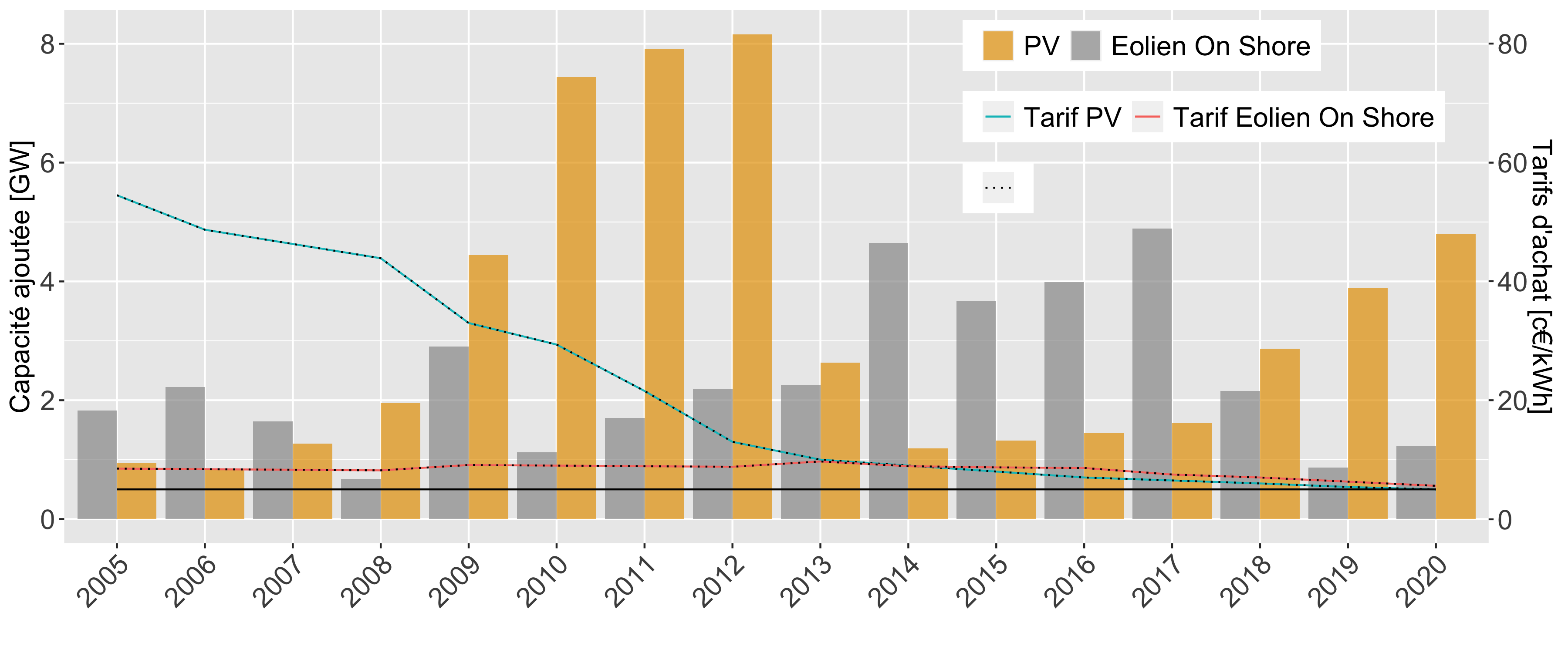
Figure 4 – Evolution of the capacity added each year in Germany (PV and wind, given by the coloured bars), evolution of the tariffs requested by producers (given by the coloured lines) and of the average resale price (black line) of electricity generation (excluding taxes and network costs), set here at 5 c€/kWh. Subsidies to intermittent renewables on average make up the difference between the tariffs requested and these 5 c€/kWh.
What we are paying today.
In Germany as in France, the remuneration of project developers rests on the sale of the electricity produced, at the average selling price (around 5 c€/kWh), and on subsidies that make up the difference between the average selling price and the tariff requested by the producer at the time of construction. The consequence is that we are still paying today for projects set up before costs fell. As Figure 4 shows for the German case, a wind or solar project set up today no longer needs a large subsidy, especially compared with what existed for the solar plants built before 2011. In France the same phenomenon is observed, and the explosion in subsidy volumes in 2010 led France to a moratorium before abruptly cutting the guaranteed tariff. Although French deployment is far smaller than in Germany, the subsidies granted during the last decade nonetheless weigh on the bill. The Court of Auditors carried out the exercise of assessing and integrating, over the period 2018-2045, the sums allocated for all projects built up to 2017. The total is €121 bn [CDC2018] p46, for an energy produced over the lifetime of the corresponding installations of about 700 TWh (i.e. an average subsidy of about 17 c€/kWh and a cost of 22 c€/kWh; half of today’s subsidy concerns projects built before the moratorium). That amount is spread over time, and the annual charge today of around €5.5 bn/year [DecompCSPE] could be €7 bn/year within 3-4 years before decreasing progressively. In Germany today, the amount paid every year for projects set up in the past is around €20 bn/year.
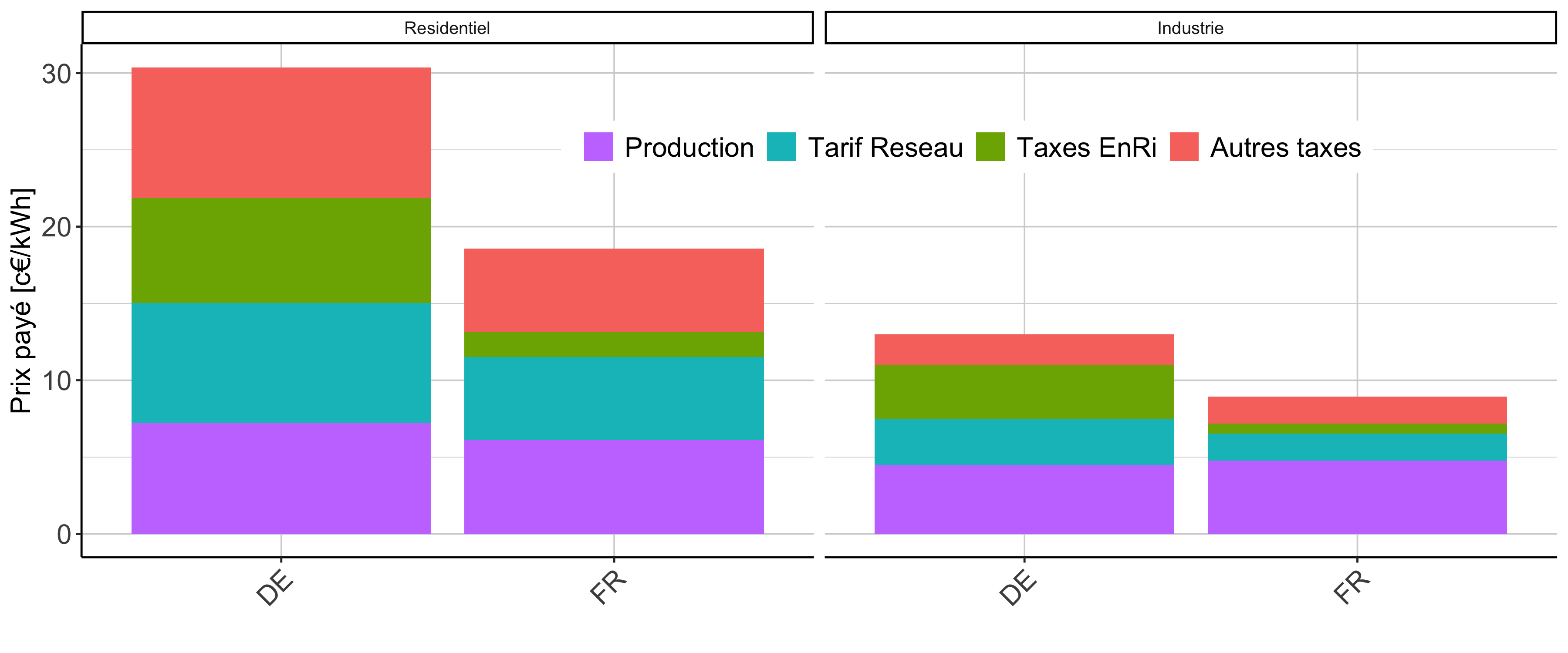
Figure 5 – breakdown of the electricity prices paid by the final consumer in 2019 across three items: (1) cost of electricity generation, (2) network use tariff (TURPE), (3) taxes used to finance renewables deployment (about half of the 2.2 c€/kWh of the CSPE [DecompCSPE]), and (4) other taxes (VAT in particular). The German case is distinguished from the French one, as well as by connection level (residential consumers connected at low voltage and industrial consumers connected at medium or high voltage). Sources for Germany [CleanWireBT], sources for France [CRE2021] and [DecompCSPE].
Monitoring how these sums evolve must remain a point of attention; Agora Energiewende has set up a freely accessible tool for accounting for how these subsidies weigh on our bills [AgoraOutil2019]. Yet the cost of renewables has now fallen enough that newly installed capacity weighs less on the energy bill. Offshore wind, with its higher capacity factor, is no exception to that rule. Looking at the weight of these past subsidies on our electricity bills (the green part in Figure 5), one sees that it still generates an extra cost of a few % in France and 30% in Germany. But investment is not over, and for France the subsidies to come for nuclear deployment will be substantial — it remains to be seen through what mechanism they will be deployed.
The cost of intermittency
The fall in the cost of wind and solar projects worldwide must not make us forget the issue of intermittency and the extra system cost it implies. These generators do not necessarily produce when they are needed and, despite the smoothing effect of aggregating these sources, this implies an extra cost. It is covered by storage and flexibility: demand-side management and batteries for the short term, hydro storage for a few days, and renewable gas (hydrogen, synthetic methane or biomethane) for the longest periods. On this point, Germany counts far more on green hydrogen than on biomethane. In the longer term, the future nuclear plants to be built could play a role here, inasmuch as optimising their maintenance programme already provides seasonal flexibility useful for the thermosensitivity problem, and projects under study show that combining them with thermal storage could allow nuclear plants to contribute to the daily flexibility requirement.
On the cost of renewables’ intermittency, studies are already numerous. They show that this cost depends on the penetration rate envisaged, but also on the definition used; we will have to come back to this subject in another post. Let us just note here that the study to be published in September by RTE will give far more precise figures than what exists today on these points. For now, the existing studies suggest adding between 0.5 c€/kWh and 4 c€/kWh depending on the ambition (say rather 1 c€/kWh in the N2 scenario and 4 c€/kWh in the M0 “100% renewable” scenario [ADEME2050], but we will come back to this because the very notion of “system cost” [CoutSysteme] is highly problematic). One can consult [Girard2020E&P] to grasp the orders of magnitude on these questions, or [Shirizadeh2020] for a recent publication. The comparison with a serially produced EPR system could lead to comparable costs between an intermittent renewable system and an EPR system, around 8 c€/kWh (far from Flamanville’s 15 c€/kWh) — and therefore in every case higher than current generation costs. That increase is inescapable and lies ahead of us; we must prepare for it.
Material resources and land use, two further difficulties
Intermittency is only one of the problems raised by renewables; the technical solutions are fairly well identified and the figures exist. Another issue is acceptability and land use, especially for wind, which occupies a certain place in the visual field. That can be a source of pride for some local authorities which are themselves active in setting up projects, or a source of rejection. In Germany the culture of citizen cooperatives and regional arrangements is stronger, and we still have much to learn from our neighbours on these questions: 42% of the total installed renewable electricity capacity is owned by individuals and farmers, representing about 50 GW of installed capacity [Rudinger2019], and it remains a pillar today for our neighbours [Participatif2021], even though since 2017 that format is almost no longer possible. For solar PV this problem is much less important, because it is a relatively dense energy (about 1000 km^2 of panels are needed to produce of the order of a hundred TWh, which would already be very significant in the French power system) that can be integrated on commercial buildings, large car parks and sometimes even in connection with agriculture (agrivoltaics), or through the development of large ground-mounted plants — even though the latter should not be encouraged too much, since it is a form of land artificialisation.
Our use of materials is also an important issue and will deserve another post, but one can consult [Generate], [Vidal2018], [Vidal2021] to see that a recycling rate for our metal use above 70-80% is indispensable by 2050. That is one more reason to push for sufficiency. Note that although recycling is already an obligation in wind (85% of the mass recycled today in France and a 95% target from 2024, see [FEE]; fibreglass turbine blades are for now the main problem from that standpoint [RecyclingBlades], and foundations must be removed) and in solar PV (95% according to [InSunWeTrust]; the plastic of the panels is for now the only non-recycled content), the problem arises for certain materials in particular (especially cobalt and copper [Generate]). One must also understand that the more dispersed the use (typically a smartphone, or inverters, which additionally have a short lifetime), the harder or more costly recycling is. Much remains to be invented and imposed here in terms of recycling and sufficiency. One may hope that increasing the lifetime of installations also becomes an objective in itself. We have much to learn from Germany today; our recycling standards are similar, but its experience with decommissioning and repowering existing plants is important (see Figure 6), as is its understanding of how installations age.
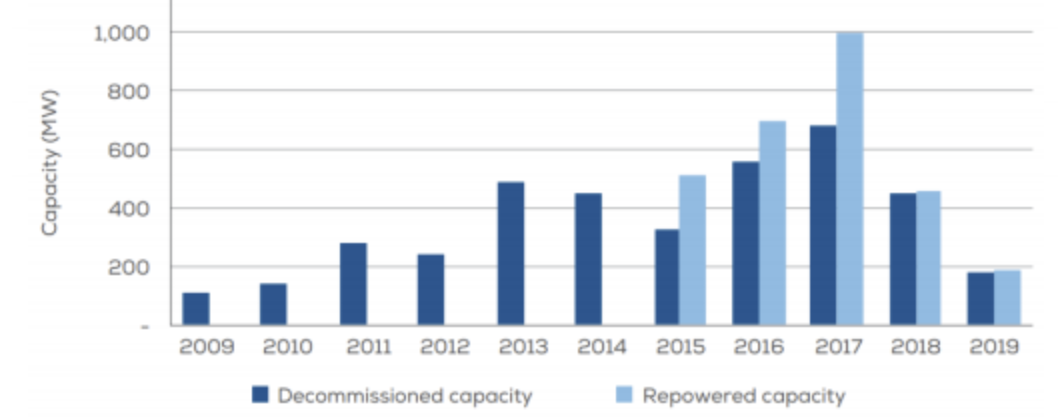
Figure 6 – Repowering in Germany: replacement of end-of-life capacity by new capacity, source [OFATE_recyclage].
The industrial dimension of the energy transition
The strong industrial-strategy stakes in these questions must not be forgotten, with their alliances (European? American? Chinese?) but also their confrontations. This subject is too vast to cover here, and I have not explored it enough. Let us simply mention a few aspects. This strand was well taken into account by the Germans, who relied on the EEG to give their industry a growing turnover. During the negotiation of the energy-climate package, Germany and Denmark convinced the Commission to introduce a specific target for renewable electricity, which broadened the market for industry. France reacted late on this subject; it did so, for instance, in the first offshore wind tenders, with selection criteria in which the total price represented less than half of the criteria. It will no doubt push for the taxonomy to include nuclear, which will make it easier for us to build in Poland and at home. France has also supported, through Investissements d’Avenir, GE — which had bought Alstom (a takeover analysed in depth in this documentary [RachatAlstom]) — to move from 6 MW turbines to 13 MW turbines. Although we have no offshore wind in France, GE managed to enter this nascent market and has exported 400 turbines of 13 MW [Eolienne13MW]. One should no doubt also discuss the conditions of the Alstom takeover [RachatAlstom], the difficulty of creating a local industrial sector in PV, and the anti-renewable relentlessness of part of the French, which takes the form of nuclear/renewable confrontations that amount to a war of the French against themselves. German industry is doing better out of it, but nothing is lost; the reindustrialisation of France is a necessity, even if it will not happen overnight. It also goes through the coexistence of the different sectors.
The power network, fundamental differences.
If the cost of electricity for a German consumer was almost twice as high as for a French consumer in 2016 (Figure 5), that is not the result of renewable subsidies alone. Generation costs are similar in the two countries, but taxes are higher in Germany and so is the network use tariff. As regards taxes, they are simply computed on a larger sum and correspond to a higher percentage. The deployment of renewables has an impact on network cost, but it is not the main factor causing this difference. We will therefore talk briefly about what distinguishes the German network from the French one.
The power system is made up of an electricity generation system (for a more complete description see for instance this post [Girard2020]), a transmission network carrying electricity at very high voltage over long distances, and a distribution network split into two parts: high voltage A (HTA, formerly medium voltage) and low voltage (BT), delivering electricity to the final consumer. In France these three voltage levels correspond to roughly equivalent shares of network costs.
There are two important differences between the German and French networks. The first is a difference of size and structure, visible in Table 2: the German low-voltage distribution network is overall much longer and more heavily buried than the French one. Yet the cost of the network at a given voltage level has a component proportional to the km of lines that is at least ten times higher for buried lines. This results in a significant extra cost, which in Germany translates into greater network reliability [OFATE_Fiabilite_2019]. It is difficult to debate the cost of that level of reliability; the subject comes back from time to time in France [FNCCR2009] and [QueChoisir2013], but one may think that the level of undergrounding in Germany is more linked to a desire by municipalities to remove lines from the visual environment than to considerations about network reliability.
The second difference between these networks concerns the management model. In France we have a single transmission system operator, RTE, and one company, ENEDIS, which manages about 95% of the distribution network, whereas Germany manages its network through several hundred local companies. For the transmission network there are 4 large zones managed respectively by TenneT, 50Hertz, Amprion and TransnetBW. It is nonetheless difficult to say what the impact of this management model is on cost, but it implies today strong variability in network costs within the country itself. In France, it is not the near-monopoly but the network pricing through the TURPE system [CRETURPE], common to the whole territory, that allows a city/countryside equalisation system to endure — the fruit of a long struggle, notably by the FNCCR between 1950 and 1975 [Poupeau2007].
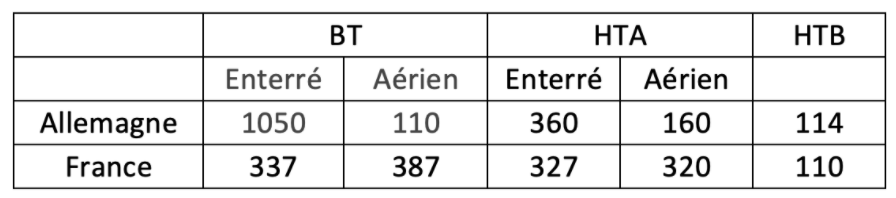
Table 2 – length of the German and French networks (thousands of km) by voltage level and undergrounding of lines. 2019 data for France, 2013 for Germany; the level of undergrounding can only have increased since then in Germany.
The Germans face certain difficulties today with their transmission network, in connecting generation, which is mostly in the north, with the large consumption sites, which are rather in the south. That difficulty is problematic today for renewables deployment in Germany, since the acceptability of a new line between north and south is hard to obtain. It is a source of learning for France, which for now has fewer problems from that standpoint but which has taken care to analyse the situation to 2035 in a very detailed study of the necessary investment [SDDR2019]. Those investments are mostly linked to the ageing of installations also built over a compressed period after the war, but the cost of renewables on the network must also be taken into account at that horizon, even if it would not exceed 0.3 c€/kWh. For 2050, here again the ongoing RTE study should bring precise assessments. In the distribution network studies are still lacking, but although most installations are connected to that network, most of the energy is injected at the interface with the transmission network, at the source substations, and intermittent renewables weigh on average less on the distribution network than on the transmission network. The distribution network has also had to face the ageing of its installations and, after a phase of under-investment between 1996 and 2008 that had brought electricity costs down [FNCCR2009], the upgrading carried out over the past 10 years has also driven up selling prices in France (between 2010 and 2020, see [CRE2021]).
Electric heating and the winter electricity peak, the French experience.
A singular difference between the French and the German power systems is the electrification of heating. Today electric heating in France covers about 10-15% (40-50 TWh per year) of the heat requirement in the residential sector, which is little (even though it represents 30% of dwellings) but remains a global exception. That consumption is not without consequences for the power system, and electric heating as we have deployed it causes a very large winter peak that can represent 50% of electricity consumption on a cold day — 50 GW, almost the capacity of our nuclear fleet (63 GW) just for heating. This is what is called thermosensitivity, and France accounts for almost half of European thermosensitivity [PostThermoSens]. During a cold spell such as that of the famous winter of 2012, we depend heavily on support from our neighbours.
It is important to understand that there are two types of heating electrification. The first is the one we applied in the 1990s-2000s, which consists in putting poorly performing electric radiators in dwellings that are themselves not very well insulated. The second, applied today in France and Germany, and an essential ingredient of the energy transition, consists in insulating buildings and then installing heat pumps, which perform very well. As our network operator RTE discusses perfectly [RTEChauffage2035], the first kind of transition puts the French power system in difficulty, whereas the second meets a need without weighing too much on the system. That said, by 2050, even by deploying the second solution, thermosensitivity risks being a problem [Girard2020Chauff]. In that sense, the first method (using “toaster”-type electric heaters in poorly renovated dwellings) is not only ineffective for meeting our SNBC objectives, but it also makes us take risks with the deployment of the second method. Thus our past deployment of “toaster”-type electric heating is more a handicap than a head start. On the other hand, we have today deployed far more heat pumps than the Germans (6 million in France against 1 million in Germany in 2019, [StatPAC]), but these are air-to-air heat pumps, which are cheaper, often supplemented by “toaster”-type radiators and used for air conditioning in summer.
Hydrogen, a common programme with differences of scale.
The prospects for decarbonising the energy sector through the use of low-carbon hydrogen are numerous, and this avenue is shared by France and Germany. The use of hydrogen for long-distance transport remains an open question, since the use would be inadvisable from an energy efficiency standpoint (on long-distance journeys biofuels are one solution, but batteries or cable charging systems are also considered) — yet it is included in some scenarios.
Developing the necessary electrolysers could be an opportunity for joint progress. In September 2020 France put in place a national strategy endowed with €7 bn to build 6.5 GW of electrolysers by 2030, supporting research and developing heavy mobility with low-carbon hydrogen. In Germany the State is putting in €9 bn, and one can say that German demonstrators today are larger than what is being done in France: 24 MW electrolysers [ElectrolyFr] are in service and bigger projects are under way. Nothing of the sort in France for now.
The trajectories to 2050 are still being discussed and one can imagine significant differences between our two countries. First on volumes: the Germans have a stronger industry and, without biogas, they will have to produce far more hydrogen. It is already clear that Germany will have to import this green hydrogen from outside Europe, with demand in 2050 assessed at almost 300 TWh/year. Importing part of this energy corresponds, in these scenarios, to an enormous reduction in imports compared with today, since natural gas and oil imports are brought to zero. Note that seeking total autonomy on this front would make no sense. For France the same question will arise, even if it is hard to say what the volumes will be in 2050, between the rather low figure given by the SNBC (40 TWh/year) and the Hydrogen+ scenario at 130 TWh/year.
For these imports, joint solutions could emerge, such as a network allowing a connection with North Africa [Backbone2020], but that remains to be studied against transport in the form of ammonia, or even against relocating the consuming industry itself. Today the rapid development of transport and storage infrastructure is being pushed by Germany, which wants to develop very large hydrogen volumes (300 TWh by 2050), more than by France. If such an infrastructure comes into being, it will not necessarily be the result of a national or European decision and could quite simply emerge from the extension of the existing infrastructure that today links production sites to some large consumption sites in Germany and the Netherlands. France keeps for now a less committed approach on this subject and is aiming at setting up regional clusters as a first step.
Conclusion. For a constructive demandingness.
Whether through the promotion of intermittent renewables or of nuclear, or of both as we encourage here, one observes that low-carbon electrical energy is not unlimited. That must make us prefer sufficiency wherever possible. It is one of the subjects we have not taken the time to address here, and it is not the only one. There are indeed other important subjects on which comparing our countries is rich: recycling and the circular economy, the levers of sufficiency, the electrification of transport, building renovation, the decarbonisation of industry with low-carbon hydrogen, energy communities, electricity markets. On all energy transition subjects, the Franco-German Office for the Energy Transition does quality work, organising conferences and publishing studies. Some are sometimes irritated by the importance the debate on the power system takes; we have mentioned other carriers here (biogas, wood), but the energy transition goes through an increased importance of the power system and, even though we already have a low-carbon system, we are today at a turning point in its history and its future must be decided. Forbidding ourselves from thinking about it calmly means missing an important subject.
The time spent by one industry crushing another instead of building is not spent for the benefit of the collective; that is what Ivan Illich denounces in his essay on conviviality. The space taken by the defenders of monoculture in trying to discredit their opponent does not really enrich our fight against climate disruption. Demanding discussions and a certain spirit of controversy are indispensable, but many of the confrontations between industries are simply sterile. They could be laughable if the consequences were not so much of a problem — as with the distortion of information by some journalists and on social networks, where discussions sometimes take a violent turn. One unfortunate consequence is that some prefer to lament the problems rather than seek to commit to and promote a set of solutions. It also sometimes results in difficulty finding reliable information on subjects with strong industrial stakes, and in political appropriation that sustains the ideology of miracle solutions and contributes to inaction. In the end we will blame our neighbours, Europe, the world or a few abstract grand principles. Nobody comes out of it enhanced.
Here as elsewhere, scandal and divisive discourse always attract more than the thankless analysis of details and the search for consensus — but the French are far from wallowing in it. Because quality information does exist: that offered by institutions such as the Court of Auditors, RTE, the transition ministry’s data, the CRE and ADEME; that given in some media such as the sites connaissance des énergies, techniques de l’ingénieur or décrypter l’énergie; even social networks sometimes bring very good content, for instance with the YouTubers Le Réveilleur or Mr Bidouille. Moreover, the fact that a form of media confrontation is playing out on the ground of environmental questions is a very good thing, because it raises awareness and our demandingness around important questions such as forest management, sustainable agriculture and the food it underpins, the use of mineral resources, nuclear waste, our modes of transport, sufficiency, the reindustrialisation of Europe, and so on. In no case do the problems encountered imply throwing the baby out with the bathwater.
In each of these fields, this awareness must translate little by little into the political sphere at every scale, and not only through the SNBC or at the individual level. Cities, for example, sometimes make it possible to move faster, and they can do nothing without solidarity with the rural territories that are often the places where energy and food are produced — just as the whole is nothing without coordination and a shared demandingness at European scale. That is why the Franco-German pair must play a driving role, showing that unity is possible while respecting each other’s differences.
Bibliography
[Ministere2020] January 2020, CGDD, “L’empreinte carbone des Français reste stable”
[Ministere122020] December 2020, French ecological transition ministry. Estimation de l’empreinte carbone de 1995 à 2019.
[exiobase] Exiobase 3.x multi-regional input-output (MRIO) database.
[German statistical office] German statistical office, 2019. Analysis of GHG emissions over 2010-2015 accounting for international trade.
[SNBC-v032020] March 2020, French ministry for the ecological and inclusive transition. La transition écologique et solidaire vers la neutralité carbone (description of the current version of the SNBC)
[NegaTep2017] Sauvons le climat, 2017. “Negatep” scenario.
[Academie2021] 2021, note from the Academy of Technologies. Perspective de la demande française d’électricité d’ici 2050.
[Negawatt2017] NegaWatt 2017 scenario.
[Tresor2018] February 2019, French ministry of the economy and finance. Commerce extérieur de la France - Résultats 2018
[Germany] September 2020, German energy balance.
[ONFMosaique] November 2020, ONF, L’ONF prépare l’avenir des forêts publiques
[MinistereCIVE] August 2014, French ministry of agriculture. Qu’est-ce qu’une culture intermédiaire à vocation énergétique?
[BiogazADEME2020] ADEME 2020, Base Carbone. Carbon impact of biomethane.
[ADEMEEmissionsBois] ADEME - Life-cycle analysis of wood energy.
[ADEMEFlammeVerte] ADEME - Wood and air quality.
[METHALAE2020] How can anaerobic digestion be a lever of agroecology? The results of MéthaLAE
[TerraNova2021] March 2021. Développement du gaz renouvelable : pour une perspective agroécologique. Terra Nova note.
[Gardanne2020] 6 January 2021, L’Usine Nouvelle. La centrale biomasse de Gazel Energie à Gardanne se prépare au redémarrage.
[ADEMEForet2016] Forest availability for energy and materials by 2035
[IGNInventaire2019] March 2021, IGN. La forêt en France : portrait-robot
[Thran2020] Biomass and Bioenergy, Volume 142, November 2020, Thrän et al. Bioenergy beyond the German “Energiewende” – Assessment framework for integrated bioenergy strategies
[OFATEBioEnergie2020] OFATE, December 2020. Note on the impact of bioenergy on environmental preservation and the fight against climate change
[IFRI2019] April 2019, M-A Eyl-Mazzega, C. Mathieu. Biogas and biomethane in Europe. Lessons from Denmark, Germany and Italy.
[SublimeEnergie] Website of the company Sublime Energie.
[InstallationsBiogaz] Open data, biomethane observatory.
[CREGaz2030] July 2019. CRE foresight committee. LE VERDISSEMENT DU GAZ
[ENEA2017] October 2017, ENEA Consulting. État des lieux du biométhane en France et pistes de réflexion pour le développement de la filière
[PanoramaGaz2020] Panorama of renewable gas in 2020.
[AgroEcologie2017] May 2017. Jean-François Briat, Dominique Job, LES SOLS ET LA VIE SOUTERRAINE
[AFTERRE2050] AFTERRES scenario, agriculture and food 2050. Produced by Solagro.
[Energy-Charts] Energy statistics site maintained by Fraunhofer ISE
[Feiertag2013] Olivier Feiertag, Histoire Politique 2013/1 pp128-142. La France, le dollar et l’Europe (1981-1989). Aux origines globales de l’euro
[ASN042021-vieillissement] Economic affairs committee, 7 April 2021, hearing of Bernard Doroszczuk, chairman of the ASN. Excerpt on the ageing of the current fleet.
[SFENFalaise] April 2019. Report of the French nuclear energy society, Quand décider d’un renouvellement du parc nucléaire français ?
[ArtelysEnergiewende2018] March 2018, Artelys-Agora-IDDRI study, L‘Energiewende et la transition énergétique à l’horizon 2030.
[EPR2050] July 2020. Nouveau nucléaire français. Report of EDF’s work with the government.
[RTE2021] January 2021, RTE. Public consultation on the framing and assumptions of the scenarios
[Foltz2019] 2019, Foltz. La construction de l’EPR de Flamanville. Report submitted to the finance minister and to EDF’s CEO on 28/10/2019.
[ASN042021-Carenage] Economic affairs committee, 7 April 2021, hearing of Bernard Doroszczuk, chairman of the ASN. Excerpt on the refurbishment programme.
[HautCommisariat2021] 24 March 2021. Note from the High Commission for Planning. “Électricité : le devoir de lucidité”.
[SMREDF] April 2021, Energeek article. EDF DÉVOILE LE DESIGN DU SMR NUWARD, SON MINI-RÉACTEUR NUCLÉAIRE CIVIL
[AIAE2010] 2010, IAEA report. NUCLEAR ENERGY DEVELOPMENT IN THE 21st CENTURY: GLOBAL SCENARIOS AND REGIONAL TRENDS
[Huet2021] March 2021, Sylvestre Huet’s blog. La crise (ou pas) de l’atome
[Aubert2019] Parliamentary commission of inquiry into the economic, industrial and environmental impact of renewable energy, the transparency of its financing and the social acceptability of energy transition policies. 2019 commission, chaired by Julien Aubert.
[RTE_BP_2021] 2021 outlook.
[Arabie2021] April 2021, PV Magazine. Saudi Arabia’s second PV tender draws world record low bid of $0.0104/kWh
[Voltalia2020] May 2020, press release. Voltalia wins a 30-year concession for the largest solar plant in West Balkans.
[EolienMaroc] January 2016, Renewables Now. Morocco’s wind power price goes as low as USD 30/MWh
[IRENA] IRENA website. Power Generation Costs
[CDC2018] March 2018. Court of Auditors report. Le soutien aux énergies renouvelables.
[DecompCSPE] EDF website, January 2021. Evolution de la contribution au service public de l’électricité (CSPE) au 1er janvier 2021
[CleanWireBT] Breakdown of the electricity price in Germany in the residential sector and in industry.
[CRE2021] February 2021, CRE press pack. La CRE propose une évolution des tarifs réglementés de vente d’électricité au 1er février 2021
[AgoraOutil2019] October 2019, Agora Energiewende. Outil d’évaluation du besoin de soutien public des ENR électriques
[ADEME2050] June 2016, ADEME. Mix électrique 100% renouvelable ? Analyses et optimisations
[CoutSysteme] June 2018, colloquium “Evaluer le coût complet des ENR”.
[Girard2020E&P] The electricity generation mix – energy and capacity, blog post, 2020.
[Shirizadeh2020] Behrang Shirizadeh and Philippe Quirion, Energy Economics 2020. Low-carbon options for the French power sector: What role for renewables, nuclear energy and carbon capture and storage?
[Rudinger2019] Andreas Rüdinger, 2019. Les projets participatifs et citoyens d’énergies renouvelables en France, État des lieux et recommandations
[Participatif2021] Study on citizen energy in Germany.
[Generate] Summary of the results of the Generate project.
[Vidal2018] Olivier Vidal, 2018. Book on raw materials and energy.
[Vidal2021] Olivier Vidal, 2021. Lecture on raw materials and the energy transition.
[FEE] French wind energy federation, note on recycling and the use of rare earths.
[RecyclingBlades] YouTube video discussing the landfilling of turbine blades.
[InSunWeTrust] “In Sun We Trust” note on solar panel recycling.
[OFATE_recyclage] OFATE, March 2020. Report of the conference on the decommissioning and recycling of wind turbines.
[Girard2020] 2020 blog post, “energy and capacity”.
[OFATE_Fiabilite_2019] OFATE 2019, Fiabilité d’approvisionnement, qualité de tension et coûts : Étude comparative des réseaux électriques en Allemagne et en France.
[QueChoisir2013] April 2013, UFC Que Choisir study. Amélioration de l’information et de l’incitation sur la qualité d’alimentation d’électricité
[CRETURPE] CRE, Les tarifs d’utilisation des réseaux publics d’électricité.
[Poupeau2007] August 2008, François-Mathieu Poupeau. La fabrique d’une solidarité nationale. Etat et élus ruraux dans l’adoption d’une péréquation des tarifs de l’électricité en France
[SDDR2019] September 2019, RTE. Le schéma décennal de développement du réseau
[FNCCR2009] FNCCR 2009. Technical study on the fragility of the public electricity distribution network in the face of major climate events.
[PostThermoSens] 2019 blog post. Electricity demand variability and thermosensitivity.
[RTEChauffage2035] Réduction des émissions de CO2, impact sur le système électrique : quelle contribution du chauffage dans les bâtiments à l’horizon 2035 ?
[Girard2020Chauff] A contribution to the debate on the national low-carbon strategy for buildings. Part 1 - Which heating systems by 2050?
[StatPAC] Statista. Annual amount of heat pumps in operation in France/Germany from 2013 to 2019
[ElectrolyFr] January 2021. Germany to host world’s largest PEM electrolyser
[Backbone2020] July 2020. European Hydrogen Backbone
[RachatAlstom] 2017, documentary on GE’s takeover of Alstom. Alstom : une affaire d’État ?